Global Challenges of Digital Transformation of Markets,
The emergence of breakthrough technologies accompanied by active digital transformation of the economy causes global challenges that have a significant impact on the business environment, requiring constant updating of existing business models and the creation of new ones. In the growing digital economy, there is a need to implement innovative business models, digitalize business processes, search for new markets and marketing opportunities, and adapt to the challenges of digital transformation of global markets. The ongoing global changes to the quality of people’s lives have led to the emergence of new human-centered technologies, including within the framework of a new technological mode — Industry 4.0.
Effective management, including in industry, in the digital age is only possible with the use of the knowledge economy. Bringing together experts from the academic community and the real sector of the economy needs to address emerging challenges and explore new opportunities.
The conference is intended for both experts from academia and representatives of the real sector of the economy to identify global challenges and find solutions to ensure the digital transformation of regional and global markets.
The conference proceedings will be indexed in the Russian Science Citation Index (RSCI) database. Conference proceedings will be assigned an ISBN number and DOI (Digital Object Identifier).
Selected conference papers, as recommended by the Organizing Committee, will be invited for publication in the peer-reviewed Russian journal «Economics and Management» (ISSN 1998-1627), which is included in the List of Peer-Reviewed Scientific Journals approved by the Higher Attestation Commission (HAC) under the Ministry of Science and Higher Education of the Russian Federation (Category 2) and in the Unified National Journal Ranking («White List», Level 2).
Organizers





GDTM 2026
Global Challenges of Digital Transformation of Markets
September 29 — October 3, 2026
Topics
This track accepts submissions on different functional aspects of management in the age of digital transformation.
-
Digital Transformation Challenges in Logistics and Supply Chain ManagementSubmissions for this track discuss digital technologies in logistics and supply chain management, considering the current trends in optimization and digital transformation of business processes. The experience of developing logistics solutions for the tasks of the digital agenda in different countries is analyzed. A further focus is on the national and regional models of cooperation for organizing logistics networks based on digital technologies.
- Marketing transformation in the Digital EraThe problems of relationship marketing, the impact of digital transformation on marketing and marketing communications, transformation of customer experience and responsible consumption as trends in the digital economy, transformation of marketing competencies in the Digital Era are considered.
- Digital business management and transformation of business processes in the digital economyTopical issues of modern digital technologies and their impact on the operational activities of industrial enterprises are considered.
- Strategic management in the context of digitization of the economyThe issues of strategic management at the macro and micro levels, including the strategic management of territories and various types of socio-economic systems located within these territories (regions, complexes, enterprises) in the context of digital transformation, are considered.
- HR-managementModern trends and technologies of HR-management are analyzed. Such subjects as human capital investment, change management, and new requirements on the quality of human resources in the context of digitization are considered.
The section examines key issues in terms of the impact of digitalization on processes and interactions in various spheres of human activity in order to meet the needs of the individual and society. Smart technologies provide customization, omnichannel and phydgital interaction based on the analysis of digital and natural information during product promotion and interaction with consumers. A separate place in the section is given to the main trends in the collection and analysis of big data, focused on identifying consumer trends. The transformation of marketing processes allows not only to increase interest in projects of social and environmental responsibility through engagement technologies and the activities of individual ideological brands, but also to move to the design of new products and lean production.
This track accepts materials on various aspects of industrial management in the Digital Era. Track issues are related to management in construction (digital transformation in the construction industry), production management (approaches to digital transformation at metallurgical and machine-building enterprises), energy management (digital energy, cybersecurity of digital energy facilities), management of oil and gas enterprises (digital transformation in oil and gas industry), as well as industrial management in general (digital transformation of industrial enterprises). The issues of global challenges for the current management paradigm, problems and prospects for the development of the “Industry 4.0” concept and the digitalization of industries, enterprises and industrial markets, analysis of trends in the digitalization of industrial enterprise management processes are considered.
The topic of the track covers the current areas of interdisciplinary research on the problem of quality of living improving in the new technological order of Industry 4.0. Within the framework of this track, the challenges of the digital transformation of ecological-socio-economic systems and the problems of system integration of digital services as tools for improving the quality of living will be considered. The interrelation of the main requirements for the digital twin of the product, the theory and practice of introducing artificial intelligence to improve the health and well-being of the population, the social orientation of the digital services will also be the issues of the track’s work.
The section discusses the results of research related to the investigation of real economies, their subsystems and elements; forecasting socio-economic processes. Problems of the theory and methodology of institutional and evolutionary economics are presented for discussion. It also considers the issues of measurements and methods of statistical and econometric analysis aimed at the interpretation of economic phenomena. Particular attention is paid to the coordination of economic and social development in the era of digitalization, and the formation of effective management mechanisms for various agglomerations.
The track discusses the results of fundamental, exploratory, methodological and applied scientific research related to the study of theoretical and practical aspects of business processes and structures management, as well as systems, complexes and ecosystems in the context of digitalization of enterprises, industries, national and international markets. The subject of the track includes research in the field of innovation, sustainable development, collaborative consumption, development of smart cities and regional territories, project and program management, development of the real, financial and public sectors. Particular attention is paid to sustainable economic development in the context of transformation and integration processes.
This track welcomes submissions addressing contemporary aspects of the development of controlling in economics, production management, and business administration in the context of digital market transformation. The track’s scope encompasses strategic, operational, and financial controlling; the digitalisation of planning, budgeting, accounting, analysis, and control processes; as well as the application of modern information technologies, artificial intelligence, big data, and business analytics in management decision support systems.
The track addresses issues of improving controlling in manufacturing, service, and high tech companies, digital transformation of business processes, enhancing the efficiency of production management, and adapting management systems to conditions of high uncertainty.
Within the framework of the track, research is encouraged on contemporary concepts of controlling, digital transformation of enterprise and organisational management, development of methodological tools for performance evaluation, analysis of best practices in implementing digital technologies into controlling systems, as well as issues of developing new management models in the face of global challenges posed by digital market transformation.
A dedicated topic of the track will focus on The Future of Controlling: Dreams and Reality, exploring the relationship between forward-looking concepts of controlling development and their practical implementation in contemporary organizations.
Important dates
- participation in the conference,
- conference bag with related documents (program, badge, certificates etc.),
- conference paper will be sent to the publishing house for consideration of the possibility of publication and indexing in the database of the Russian Science Citation Index (RSCI).
- online participation in the conference,
- conference participant certificate (electronic version),
- conference paper will be sent to the publishing house for consideration of the possibility of publication and indexing in the database of the Russian Science Citation Index (RSCI).
- yandex.Form registration,
- each paper is subject for double-blind peer review, plagiarism check, formal requirements check and Russian grammar check,
- paper is accepted only when all the checks are passed successfully and all reviewers’ comments are fixed.
The conference will be held in a hybrid format: on campus and online. The Organizing Committee invites all participants to independently choose their participation format.
KEY SPEAKERS





Organizing committee
Chairs
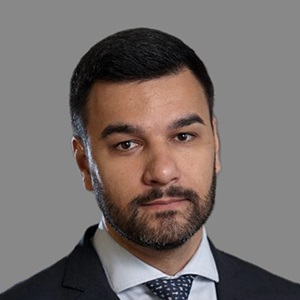
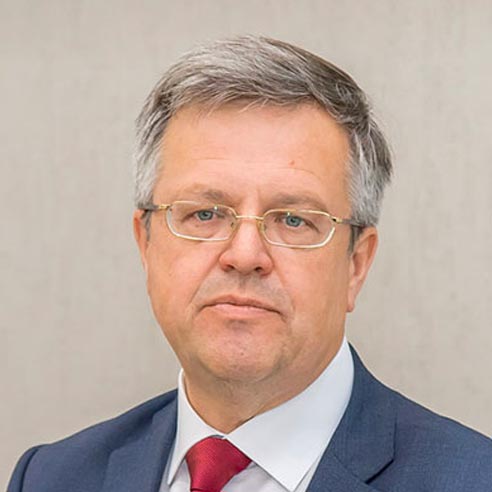
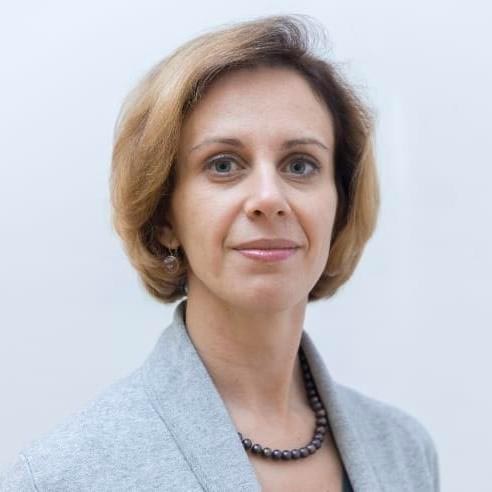


- Alekseeva Natalia, PhD, Associate Professor, Deputy Head of Graduate School of Industrial Management, Peter the Great St. Petersburg Polytechnic University
- Antonova Irina, PhD, Associate Professor, Department of Economics and Production Organization, Saint Petersburg Electrotechnical University "LETI" (named after V.I. Ulyanov (Lenin)
- Barykin Sergey, Doctor of Sciences, Professor, Deputy Head of Graduate School of Service and Trade, Peter the Great St. Petersburg Polytechnic University
- Bozhuk Svetlana, Doctor of Sciences, Professor, Graduate School of Service and Trade, Peter the Great St. Petersburg Polytechnic University
- Dudnikov Timofei, Assistant, Responsible for international affairs at the Graduate School of Industrial Management, Peter the Great St. Petersburg Polytechnic University
- Ivashchenko Artem, PhD, Senior Lecturer, Graduate School of Industrial Management, Peter the Great St. Petersburg Polytechnic University
- Ilyinsky Aleksandr, Doctor of Sciences, Professor, Graduate School of Industrial Management, Peter the Great St. Petersburg Polytechnic University
- Karmanova Anna, PhD, Associate Professor, Graduate School of Service and Trade, Peter the Great St. Petersburg Polytechnic University
- Kharlamova Tatyana, Doctor of Sciences, Professor, Graduate School of Industrial Management, Peter the Great St. Petersburg Polytechnic University
- Kozlova Nelli, PhD, Associate Professor, Graduate School of Service and Trade, Peter the Great St. Petersburg Polytechnic University
- Krasnov Aleks, PhD, Associate Professor, Deputy Director of Institute of Industrial Management, Economics and Trade, Peter the Great St. Petersburg Polytechnic University
- Lobova Elena, Senior Lecturer, Department of Economic Theory, Peter the Great St. Petersburg Polytechnic University
- Mazurin Eduard, PhD, Associate Professor, Deputy Head of the Department of Economics and Organization of Production, Bauman Moscow State Technical University
- Skvortsova Inga, Doctor of Sciences, Associate Professor, Graduate School of Industrial Management, Peter the Great St. Petersburg Polytechnic University
- Shaban Anton, PhD, Associate Professor, Graduate School of Industrial Management, Peter the Great St. Petersburg Polytechnic University
- Agadzhanyan Armine, PhD (economics), Head of the Department tourism and service, Russian-Armenian University, Armenia
- Allaeva Gulchekhra, Doctor of Economics, acting Professor, Head of the Department of Economics and Management of Industry, Tashkent State Technical University named after Islam Karimov, Uzbekistan
- Bagryantseva Ekaterina, Associate Professor, PhD, Vice-rector for research, Belarusian Trade and Economics University of Consumer Cooperatives, Belarus
- Gafurov Ubaydullo, Doctor of Economics, Professor, Head of the Department of Business Management and Logistics, Tashkent State University of Economics, Uzbekistan
- Jacob Isaac, Professor, K. J. Somaiya Institute of Management, India
- Khajiev Bakhtiyor, Associate professor, Head of Academic Affairs and Registrar’s Department, Tashkent State University of Economics, Uzbekistan
- Khalid Bilal, Doctor of Science, KMITL Business School, King Mongkut’s Institute of Technology Ladkrabang, Bangkok, Thailand
- Kiran Sharma, Associate Professor — Marketing and International Business, K. J. Somaiya Institute of Management, India
- Lebedev Pavel, Doctor of Economics, Professor, Head of Educational Programs, MIRBIS, Russia
- Malenkov Yuri, Professor, Doctor of Sciences, St. Petersburg State University, Russia
- Monica Rakesh Khanna, Professor, Doctor of Sciences, K J Somaiya Institute of Management (SIMSR) Professor of Marketing, India
- Nyoman Pujawan, Professor, Sepuluh Nopember Institute of Technology, Indonesia Reena Mehta, Associate Professor, PhD, K. J. Somaiya Institute of Management, India
- Ochilov Akram, Academician of the Turan Academy of Sciences, Professor, Doctor of Economics, Head of the Department of Economics, Karshi State University, Uzbekistan
- Panasenko Svetlana, Professor, Doctor of Sciences, Base Department of Trade Policy, Plekhanov Russian University of Economics, Russia
- Petrosyan Irina, PhD (economics), Associate Professor, Head of the Department of Economic Theory and Problems of the Economy in Transition, Russian-Armenian University, Yerevan, Armenia
- Sakhnovich Tatsiana, PhD, Associate Professor, Head of the Engineering Economics Department, Belarusian National Technical University, Belarus
- Scherbakov Vladimir, Professor, Doctor of Sciences, Head of Logistics and supply chain management department, Head of scientific-educational center Logistics, Chairman of the Academic Degree Council D 212.354.02, Russia
- Shakir Ullah, Southern University of Science and Technology, center for social sciences (Шэньчжэнь) China.
- Snytkova Natalya, Associate Professor, PhD, First Vice-Rector, Belarusian Trade and Economics University of Consumer Cooperatives, Belarus
- Sudaporn Sawmong, Assoc. Prof., Doctor of Sciences, Dean — KMITL Business School King Mongkut’s Institute of Technology Ladkrabang, Thailand
- Suvaryan Arzik, Doctor of Economics, Professor of the Department of Management and Business, Russian-Armenian University, Armenia
- Vernikov Andrey, Doctor of Economics, leading researcher at the Institute of Economics of the Russian Academy of Sciences, Russia
- Zherelo Anatoly, PhD (math), head of Information Technology Center, Belarusian State University, Belarus
Registration & paper submission
Conference participants are invited to submit their papers for review to the conference email address gdtm.spbstu@yandex.ru, specifying the section name in the subject line.
Please note: You must register for the conference using the attached registration form for your participation to be considered. Chapters received from individuals who have not registered for the conference will not be considered.
Conference papers are indexed in the database of the Russian Science Citation Index.
Registrants are invited to submit an abstract for consideration for poster or oral presentation. The Scientific Committee will select abstract submissions from conference registrants as posters and oral presentations at the meeting.
The manuscript should follow the IMRaD format:
- Title
- Authors
- Introduction
Please kindly consider the following important issues in the Introduction with the explanation of the relevance of the topic and the literature review with approximately 10 references. The authors describe in the Introduction the situation in the field of the research, prove that the topic is relevant and explain the logic of the research. In the end of the Introduction the authors disclose the research gap, the research question and the aim of the chapter. All those elements could be described on one page and a half.
- Materials and methods
It is necessary to indicate which specific methods were used for your study in the section. Research methods should be designed in such a way that any potential reader of the chapter based on this information alone would be able to repeat your research and get similar results. Also, this section describes the sources of the obtained data and the variables used for the simulation.
- Results
Results section should contain the proposed ideas, approach or a new logic being developed in the research.
- Discussion
Discussion section contains the limitations and the issues for future research.
- Conclusion
Conclusion should summarize all ideas being described in each section. The authors explain the research gap and disclose the research question. The authors show how they reach the aim of the chapter.
- Acknowledgments (if necessary)
- References
All references should be linked with the sources being written in Russian or English language. If a reference contains DOI or URL for free access, indicate it. Style – GOST R7.0.100–2018.
More information can be found in the Design Sample below:
Origin, motivation and contribution
Paper which is prepared for publishing should be original research manuscripts, never published before and not under consideration for publication in any other conference proceeding, journal and etc. Paper is supposed to present novel research results of international interest. Paper needs to be related to the main topic of the conference and conference topic fields. Paper should be written in scientific style and in good Russian only. All papers are double-blind peer reviewed. All papers are thoroughly checked for plagiarism.
The acceptable level of originality is “red” zone of 20 %.
All papers should be at least 8 and not more than 16 pages.
Ethics
Please lead ethics for publishing. If a paper contains figures or tables taken from other sources, the author must get the respective permission for reproduction them from the corresponding publishers.
Please, use content that does not violate the copyrights of third parties, confidentiality requirements, the current legislation of the Russian Federation, as well as morality and ethics in the provided materials.
Authorship
The maximum number of co-authors in a single paper is no more than 4 people. One person can be the author of no more than 2 papers.
The corresponding author is the person chosen within the group to be responsible for all contact and correspondence with the periodical. The corresponding author should ensure that all appropriate co-authors (and no inappropriate co-authors) are included in the paper, and that all co-authors have seen and approved the final version of the paper and agree on its submission for publication.
Registration & Paper Submission
Download the registration formPlease submit your materials along with the completed registration form to the conference email address gdtm.spbstu@yandex.ru, specifying the section name in the subject line.
Venue and Accommodation




The modern IMET Scientific & Educational Building has comfortable halls equipped with everything necessary for conferences and other types of business and educational events. It is situated in the northern part of St. Petersburg near the University Campus within walking distance from “Ploshchad Muzhestva” metro station.
St. Petersburg is the best tourist destination in Russia. In 2023, the city re-took prizes at the II All-Russian Tourism Award Russian Travel Awards.
We recommend conference participants to book hotels in the city center near the red metro line (it takes about 20 minutes by metro from the city center to the venue).
You can also choose the hotels that are within walking distance of the venue:
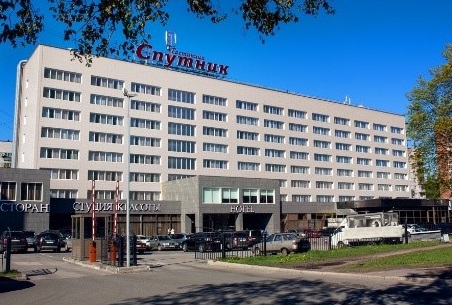
Hotel «Sputnik»
36 Toreza prospect
Metro «Ploschad Muzhestva» or Metro «Polyteknicheskaya»
(Distance to SPbPU 1,5 km)
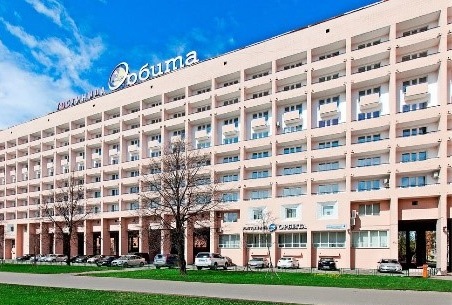
Hotel «Orbita»
4 Nepokoryonnyh prospect
Metro «Ploschad Muzhestva»
(Distance to SPbPU 1,3 km)
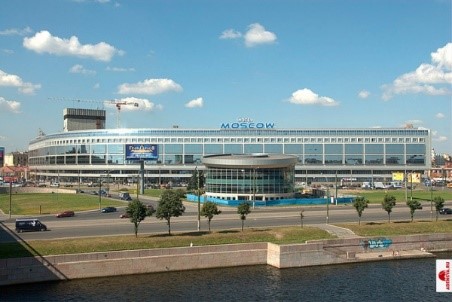
Hotel «Moskva»
2 Alexander Nevskiy Square
Metro «Ploschad Aleksandra Nevskogo»
(Distance to SPbPU 12,1 km)
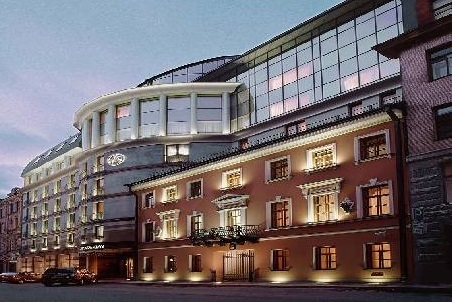
Hotel «Ambassador»
5-7 Rimskiy-Korsakov prospect
Metro «Sennaya/Sadovaya/ Spasskaya»
(Distance to SPbPU 12,1 km)

Hotels Station
,
9 Hotels in the City centre
station-hotels.ru